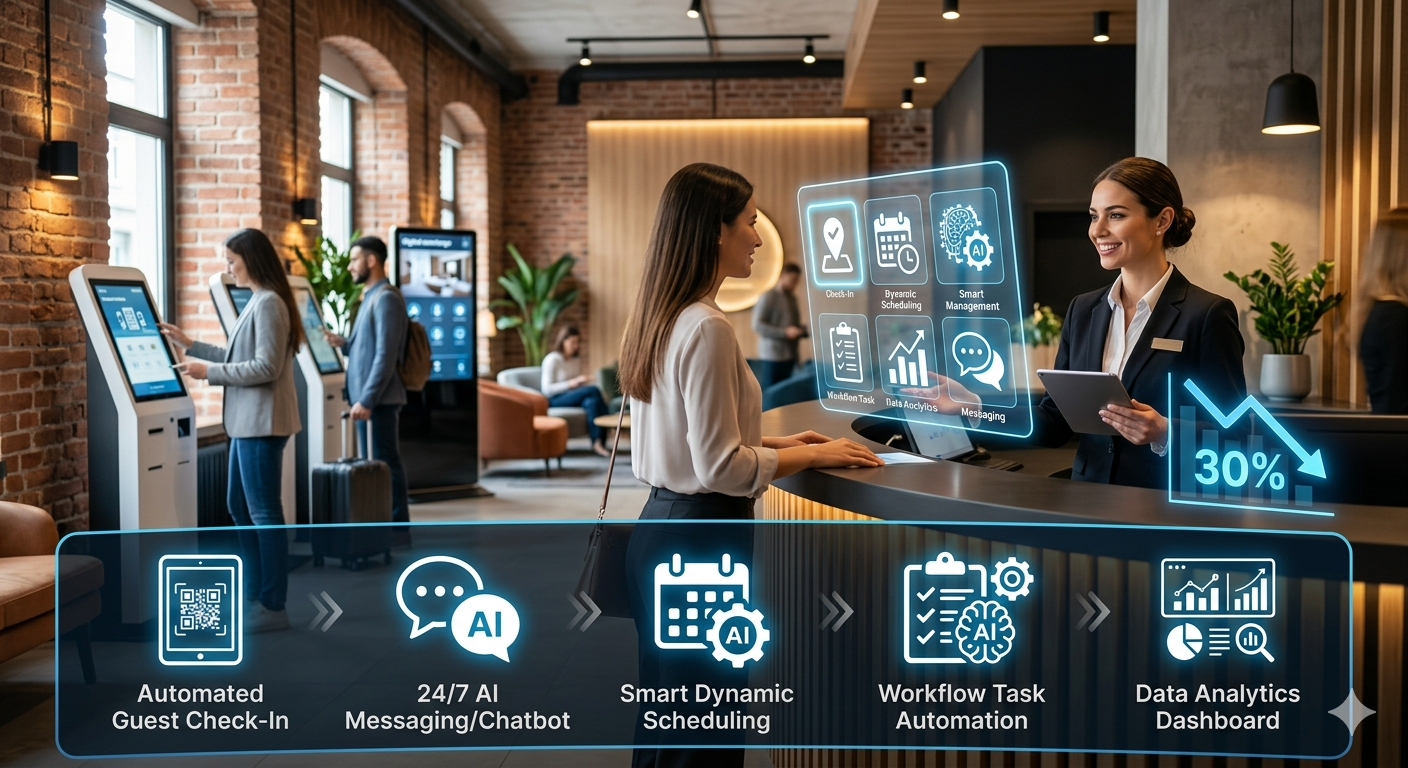
5 Ways AI Automation Can Cut Your Front-Desk Workload by 30% in 2026
If you walk into almost any medical practice in 2026, you will see the same scene. Phones ringing nonstop. A waiting room full of patients filling out the same paperwork they filled out last year. Staff juggling insurance verification calls, appointment reminders, and a stack of no-show follow-ups, all while trying to greet the next patient walking through the door.
Front-desk teams are stretched thin, and the cost is not just stress. It is lost revenue, longer patient wait times, and staff burnout that leads to turnover. The good news is that practices no longer need to choose between hiring more staff and accepting these inefficiencies.
AI automation is now mature enough, affordable enough, and HIPAA compliant enough to take on the repetitive, time-consuming tasks that eat up most of a front desk’s day. Practices that adopt the right tools are seeing front-desk workload drop by 30 percent or more, without sacrificing the patient experience.
Here are five ways AI automation is making that happen, and how your practice can start implementing them today.
1. AI-Powered Appointment Scheduling and Reminders
Scheduling is one of the highest-volume tasks at any front desk, and it is also one of the most disruptive. Every incoming call to book, reschedule, or cancel an appointment pulls a staff member away from the patient standing in front of them.
AI scheduling assistants can now handle this entire workflow without human intervention. Patients can call, text, or use an online portal to book appointments, and the AI checks real-time provider availability, confirms the slot, and sends a confirmation instantly. No hold music, no back-and-forth.
Automated reminders are just as important. No-shows cost the average practice thousands of dollars per month in lost revenue and wasted provider time. AI-driven reminder systems send text and email reminders at optimal intervals, often 48 hours and 2 hours before the appointment, and allow patients to confirm or reschedule with a single tap. Practices that implement this typically see no-show rates drop by 20 to 30 percent within the first 90 days.
What this means for your front desk: Fewer incoming calls about scheduling, fewer missed appointments to chase down, and a calendar that stays accurate without constant manual updates.
2. Automated Patient Intake and Pre-Visit Data Collection
Paper intake forms are one of the biggest bottlenecks in any practice. Patients arrive, sit down, fill out forms by hand, and then a staff member has to manually enter that information into the EHR. This process is slow, prone to errors, and creates a poor first impression for new patients.
AI-driven intake automation sends patients a secure digital form before their appointment. The form pre-populates with information already on file, asks only the questions relevant to the visit type, and feeds the responses directly into the EHR. Insurance card photos, ID verification, and consent forms can all be collected the same way.
This is particularly valuable for specialties with complex intake requirements, such as behavioral health practices that need detailed history forms, or cardiology and neurology practices that require updated medication lists and prior treatment history before every visit.
What this means for your front desk: Patients arrive ready to be seen, staff are not stuck typing handwritten forms into the system, and the data going into your EHR is cleaner from the start, which also reduces downstream billing errors.
3. 24/7 AI Chat Assistants for Patient FAQs and Triage
A significant percentage of calls coming into a front desk are not emergencies. They are questions. What are your hours? Do you accept my insurance? Where do I park? Can I get a refill on my prescription? Is the doctor running on time?
An AI chat assistant, deployed on your website or through text messaging, can answer these questions instantly, any time of day. For practices that operate across multiple time zones or serve patients who work non-traditional hours, this is a major win. Patients get answers immediately instead of waiting for office hours, and your staff is not interrupted by routine questions during the day.
More advanced AI assistants can also perform basic triage. By asking a structured set of questions about symptoms, the assistant can help route patients to the appropriate level of care, flag urgent cases for immediate staff attention, and direct routine questions to self-service resources.
What this means for your front desk: A large share of routine phone and message volume disappears, freeing staff to focus on patients who are physically in the office or who need a human conversation.
4. AI-Assisted Insurance Verification and Eligibility Checks
Few tasks are more time-consuming, or more critical to revenue, than insurance verification. Front-desk staff often spend hours each week on hold with payers, checking coverage details, deductibles, and prior authorization requirements before a patient is even seen.
AI-powered eligibility verification tools connect directly to payer systems and run these checks automatically, often the night before a scheduled appointment. The system flags any issues, such as lapsed coverage, a plan that requires prior authorization, or a balance owed from a previous visit, so staff can address it before the patient arrives rather than during checkout.
This is especially valuable for specialties where prior authorization is a constant burden, such as mental health practices managing intensive outpatient program approvals, or neurology practices handling biologic medication authorizations. Catching these issues in advance prevents same-day scheduling disruptions and reduces claim denials tied to eligibility errors, one of the most common and most preventable denial categories in medical billing.
What this means for your front desk: Staff are no longer spending hours on hold with insurance companies, and your billing team receives cleaner data, which directly supports a lower claim denial rate.
5. Automated Billing Support and Patient Payment Workflows
The front desk is often the first and last point of contact for billing questions, from explaining a balance to collecting a copay. AI automation can streamline both ends of this process.
On the front end, AI tools can generate clear, easy-to-understand cost estimates before a visit, based on the patient’s insurance and the scheduled service. This reduces the number of confused patients asking “why do I owe this much” at checkout.
On the back end, automated payment workflows allow patients to pay copays, outstanding balances, and bills through text-to-pay links, online portals, or kiosks, without requiring a staff member to manually process each transaction. Automated payment plan reminders also reduce the number of collection calls staff need to make.
What this means for your front desk: Fewer billing disputes at checkout, faster collection of patient balances, and less time spent manually processing individual payments.
The Bottom Line for Practice Owners
None of these tools are meant to replace your front-desk team. The goal is to remove the repetitive, low-value tasks that consume their day, so they can focus on what actually requires a human touch: greeting patients, handling complex situations, and providing the kind of personal service that builds patient loyalty.
When implemented correctly, with HIPAA compliance built into every workflow, AI automation gives practices a realistic path to reducing front-desk workload by 30 percent or more, without cutting staff or compromising the patient experience.
If you are exploring how AI automation could work for your practice, the right place to start is with an audit of where your front desk currently spends the most time. From there, the highest-impact automations, usually scheduling, intake, and insurance verification, can be implemented in phases without disrupting daily operations.
About the Author
Mazhar Shah is a Healthcare Digital Growth Consultant specializing in AI automation and B2B lead generation for medical practices across the USA. To explore how AI assistant solutions can be tailored to your practice, visit mazharshah.com.